
Update: Global DHS Data Now Available from IPUMS DHS
Since 2012, IPUMS DHS has facilitated analyses that pool data across multiple DHS surveys and provide additional benefits to DHS users. IPUMS DHS’ harmonization resembles the standard recode variables in the DHS public use files but goes further by applying consistent codes to the many variables, such as V130 (Woman’s religion), that have standard names but sample-specific codes. The IPUMS DHS website offers over 20,000 harmonized variables for six units of analysis (women [IR], children [KR], births [BR], men [MR], household members [PR], and woman-months [reorganized longitudinal calendar data]).
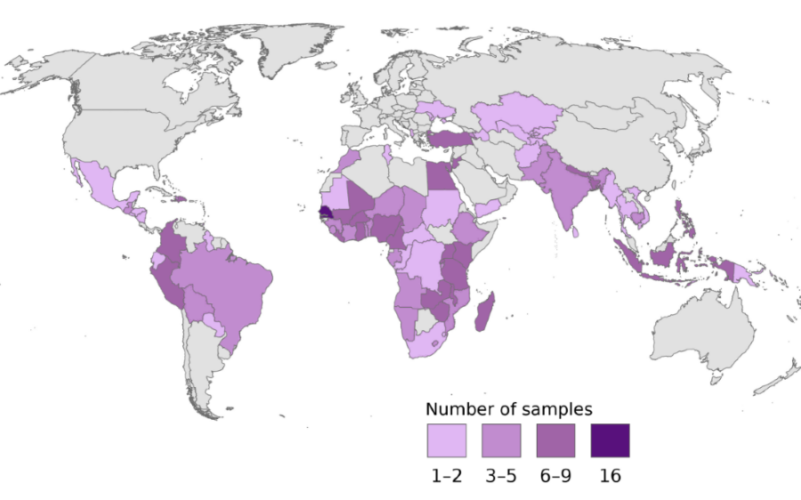
This Spring, IPUMS DHS met its goal of “going global,” expanding its scope to 84 countries and nearly 350 samples. Here is the current geographic reach of IPUMS DHS data.
Harmonized variables are not the only benefit of IPUMS DHS. Other advantages of using free IPUMS DHS data include:
- (searchable) website display of which variables are in which samples;
- translation of questionnaires into English;
- detailed documentation on each harmonized variable (including who was asked the question and associated question wording);
- an online tabulator to supplement STATCompiler; and
- a dissemination system allowing for a simple point-and-click process to create customized files for download.
Looking ahead, our plans include incorporating the most recently released DHS samples, harmonizing data from pregnancy histories, and enhancing connections between the DHS and other surveys covering demographic and health issues, including the UNICEF Multiple Indicator Cluster Surveys (MICS) and independent health surveys fielded by national governments. We look forward to maintaining our fruitful partnership with ICF staff and continuing to support DHS users!
